
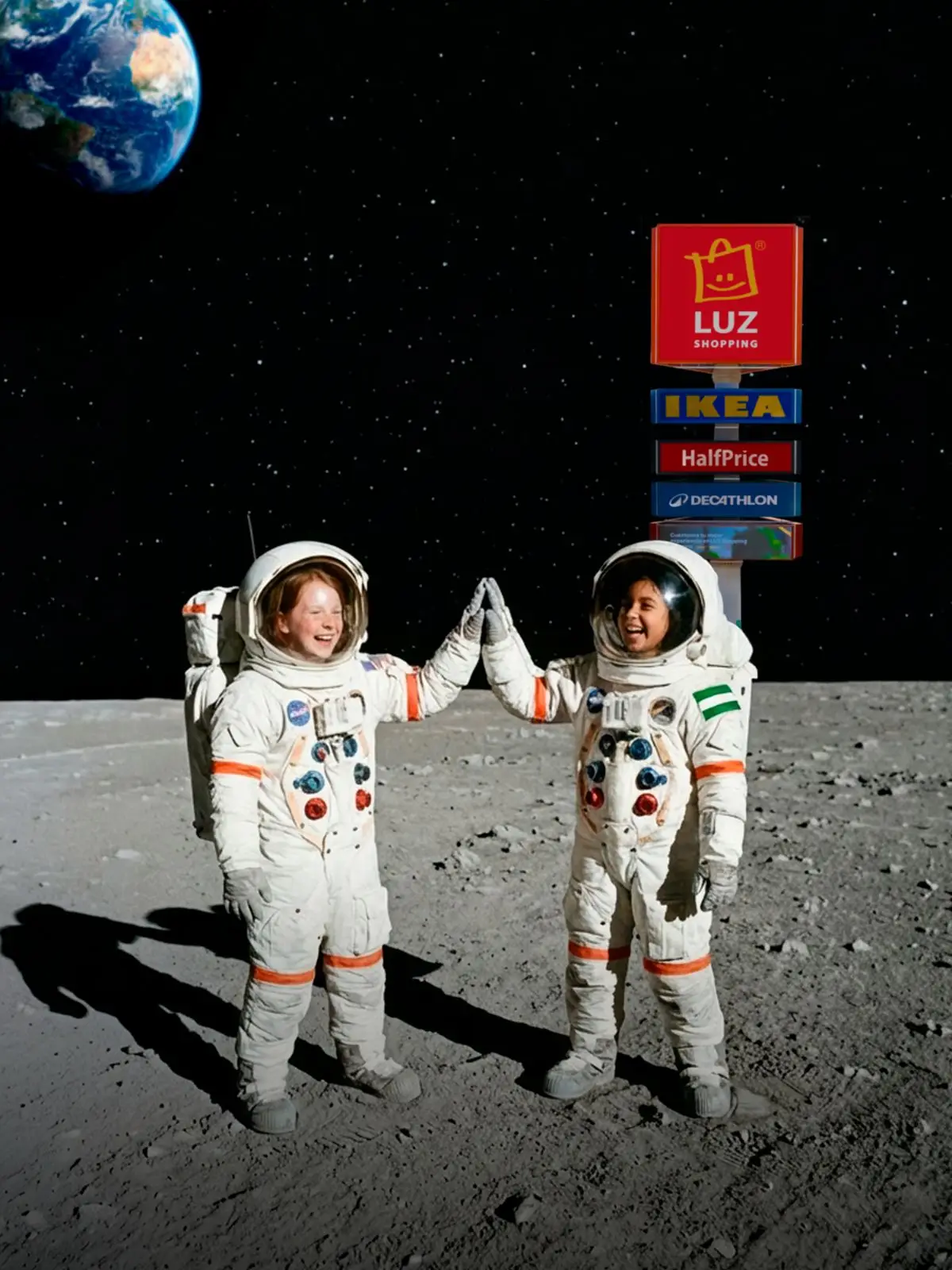
Female STEM leadership transforming science
Throughout history, countless women have revolutionised science with talent, perseverance and a vision ahead of its time—even when the world was not ready to recognise them. Ada Lovelace envisaged programming before computers even existed; Rosalind Franklin revealed the structure of life; Lise Meitner unravelled nuclear fission; and Hedy Lamarr laid the foundations for modern wireless communication. Mary Anning rewrote Earth’s history, June Almeida uncovered previously unknown viruses, and Katherine Johnson helped take humanity into space.
Joining this global legacy are Spanish women scientists who continue to shape the direction of innovation today. Margarita Salas transformed molecular biology; María Blasco leads research into ageing; and Ángela Nieto is a world-leading authority in developmental biology. Cristina Romera Castro drives solutions to marine pollution, while researchers such as Maria‑Pau Ginebra, Cristina Canal, Montserrat Español and María Godoy‑Gallardo are redefining the future of regenerative medicine and biomaterials.
Each of these women—across different eras, countries and disciplines—shows that science advances thanks to those who dare to ask new questions, challenge limits, and press on even when no paths have been mapped out. Their legacy is an invitation to dream without fear.
Nobel leadership: women who changed the course of science
Over more than a century, the following Nobel Prize laureates have shown that leadership is not always exercised through a title or position, but through the ability to open new pathways, challenge boundaries and generate knowledge that improves lives.
To lead is to dare to change what is established
Mary E. Brunkow (2025), whose work on immune tolerance opens new avenues against autoimmune diseases, and Katalin Karikó (2023), who transformed medicine with mRNA vaccines, showed that true innovation emerges when someone dares to look where no one else was looking.
To lead is to open new ways of understanding the world
Anne L’Huillier (2023), Andrea Ghez (2020) and Donna Strickland (2018) revolutionised physics by creating tools that allow us to observe the universe and matter in unprecedented ways. They are joined by Maria Goeppert‑Mayer (1963), whose explanation of the atomic nucleus’s layered structure reshaped nuclear physics and made her one of the key scientific figures of the twentieth century.
Their leadership is expressed in the courage to question what is known and to build new possibilities for all humanity.
To lead is to create tools that others can use
Discoveries such as Carolyn Bertozzi’s bioorthogonal chemistry (2022) or the CRISPR gene-editing work of Emmanuelle Charpentier and Jennifer Doudna (2020) did more than solve scientific problems: they created platforms and methodologies that now power thousands of research projects worldwide.
To lead is to drive knowledge that changes lives
Women such as May‑Britt Moser (2014), Françoise Barré‑Sinoussi (2008), Rita Levi‑Montalcini (1986) and Tu Youyou (2015) transformed our understanding of the brain, HIV, neural development and malaria. Their impact shows that women’s leadership is also expressed through solutions that save lives.
To lead is to persevere where others give up
Scientists such as Barbara McClintock (1983), Gertrude Elion (1988) and Dorothy Crowfoot Hodgkin (1964) spent decades defending ideas ahead of their time. Their stories remind us that genuine leadership does not seek immediate recognition: it holds on to its vision, even in solitude.
To lead is to clear the way for those who come after
From Maria Goeppert‑Mayer (1963) to Marie Curie (1903 and 1911) and Irène Joliot‑Curie (1935), these figures broke historic barriers and proved that scientific excellence has no gender. Their influence extends beyond their discoveries: they have inspired generations of girls and women to imagine their place in science.
That influence extends beyond their discoveries: they have inspired generations of girls and women to envision their place in science. Because scientific leadership is not merely about prizes or recognition, but about creating real impact in society and maintaining a firm commitment to the future.
That same spirit will be present at the radio programme taking place on Thursday the 12th at 10:30 a.m. in the IKEA restaurant, a space dedicated to highlighting talent, research and female leadership in science. Among the participants will be María Rosa Durán, mathematician and Senior Lecturer at the University of Cádiz, leading the Project Recaída 0: Mathematics Against Childhood Leukaemia, a pioneering initiative at national level that demonstrates how knowledge can be transformed into hope and tangible progress in the fight against disease.